During December and January each year everyone deserves a break, some get one and some forge on, working through. Considering this please be patient with and kind to all the medical, retail, hospitality, municipal and other staff who keep showing up for us during the holiday season.
The VillageMedia office will close from 20 December 2023 and re-open on 15 January in 2024. Emails will be checked from time to time during shutdown, and you are welcome to WhatsApp 072 654 9779 with your urgent requests.
Wishing you merry moments, safe travels and room for beautiful imperfections!
May 2024 be filled with health, happiness and opportunity.
FESTIVE TRADING DAYS AND TIMES FOR HILTON BUSINESSES
Below in alphabetical order...
BUBBLES LAUNDRY SERVICE 'Please note our December public holiday closed dates. This applies to our Hilton Avenue, Athlone Circle and Parklane Centre depots. Happy Holidays to all of our valued Customers!' Call 033 001 0732 or 033 386 4865.

D3 STUDIO 37 HILTON AVENUE
Attention D3 Studio Customers! Trading Hours Update
15th Dec: 9 AM - 1 PM
23rd Dec: 9 AM - 12 PM
27th, 28th, 29th Dec: Open from 9 AM to 1 PM
30th Dec: Open from 9 AM to 12 PM - Don't miss out on shopping during these hours.
We're excited to serve you! OPEN from 3 January for the New Year.

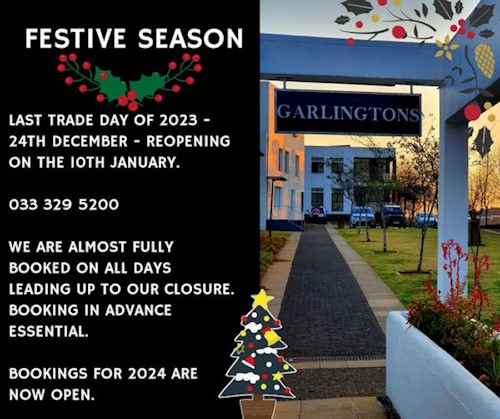
GARLINGTONS Bistro and Deli operates under the amazing management team of Mik and Steph Szecsei and well-loved chef Alex Poltera.
Booking is recommended soon for the holiday season as they are almost booked out.
Kindly note that phones are monitored from Wednesday to Sunday when restaurant is open.' Call 033 329 5200.
HILTON VILLAGE BUILD IT 'Dear loyal Customers.
Please take note of our trading hours during the Festive Season.
15th Dec - Trading from 8 - 1pm
16th Dec - Trading from 8 - 1pm
Thank you for your continued support!'
Call 033 343 3077.

HILTON FAMILY DENTAL CARE 'Wondering where to find a dentist this holiday season? Look no further! Family Dental Care stays open throughout December for all your dental needs! Got a dental emergency or just need a checkup?
Book your appointment today, and let the festivities begin with a radiant smile!'. Call 033 343 1677.
HILTON VETERINARY HOSPITAL 'With the back-to-back public holidays approaching, we'll still be open! Our opening hours will be as follows:
Consults: 9am - 10am
Reception: 9am - 7pm
For all your last minute pet food or toys, our reception will be available! Please only use our emergency number for emergencies. Wishing everyone and their furbabies a wonderful rest!
Reception: 033 343 4602
Emergency ONLY: 082 819 7645'


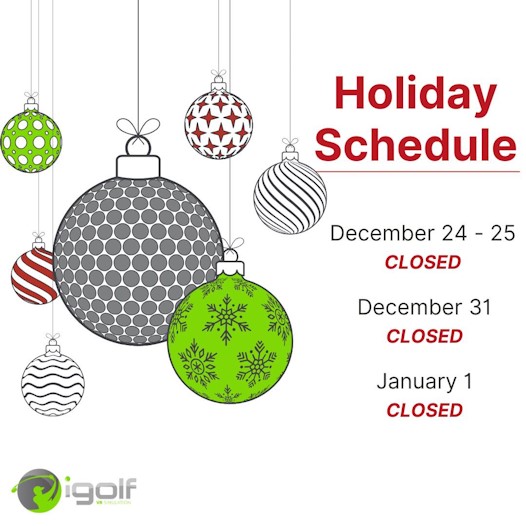
IGOLF KZN 'Festive Swing Season! At iGolf KZN, the festive spirit and swinging excitement continue throughout the holiday season! We're open for your golfing thrills and coffee delights, with only a short break on the 24th/25th Dec, 31st Dec, and 1st Jan. Make your holidays unforgettable with a round on our simulator and a sip of joy at our coffee shop. Swing into the festive season with iGolf KZN!'
You can book sessions through our online booking portal:
https://igolfkzn.co.za/book-your-indoor-golf-simulator-sessions/
For more information: call 079 874 6806 or email This email address is being protected from spambots. You need JavaScript enabled to view it.
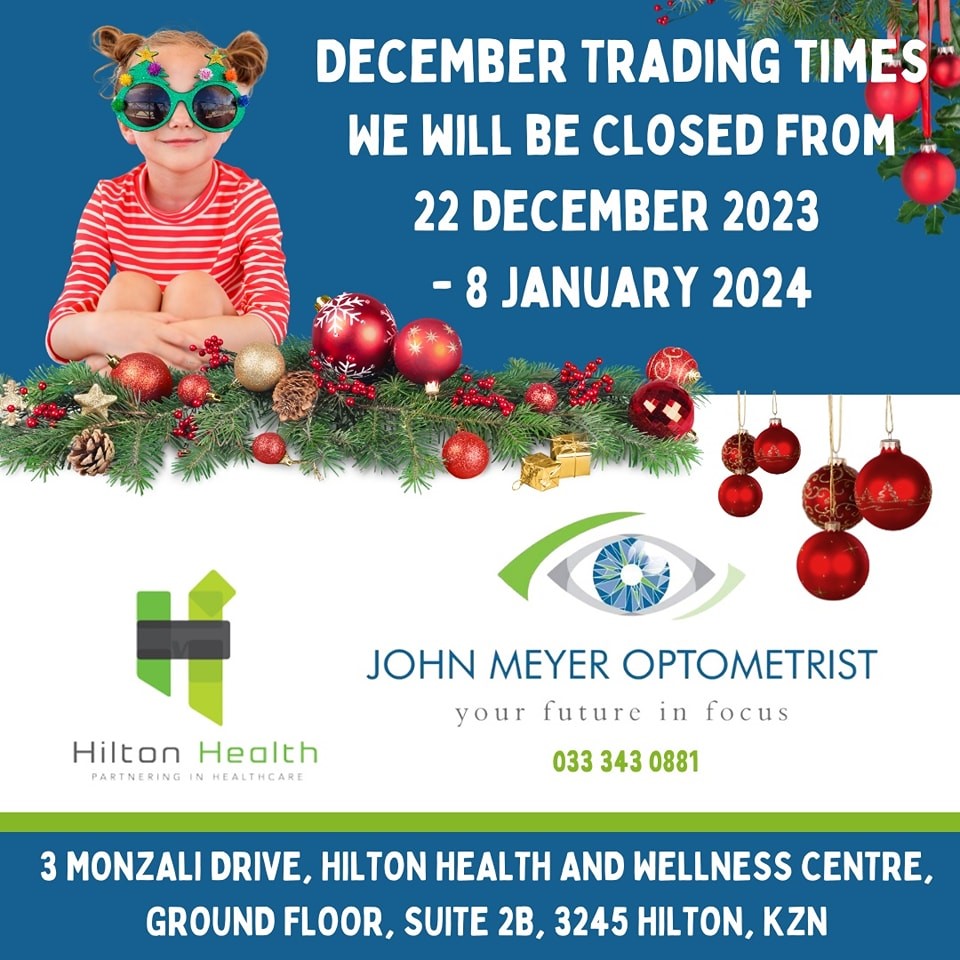
JOHN MEYER OPTOMETRIST 'As the festive season approaches, please note our trading hours from December 22nd, 2023, to January 8th, 2024. Book your eye check-ups and appointments in advance to secure your spot during this season of giving and celebration. Contact us on 033 343 0881 or visit our website www.johnmeyeroptometrist.co.za to schedule your visit. Wishing you a joyful holiday season!'
NINO'S HILTON 'As we start to wind down 2023, our trading hours will be as follows:
We will open daily We will open daily #niñoshiltonat 7:30am.
We will all be enjoying time with our families on the following days:
25th December - Closed
26th December - Closed
1st January - Closed.'


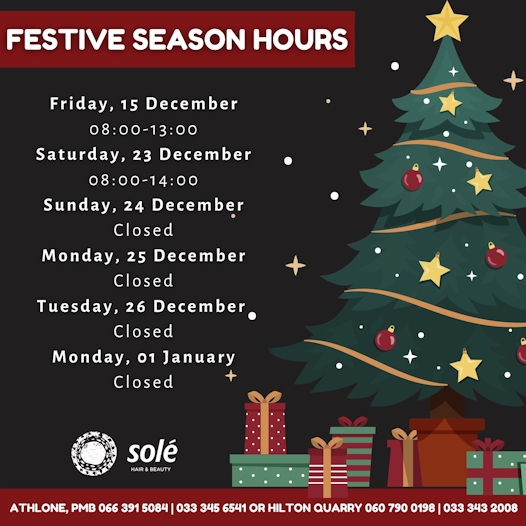
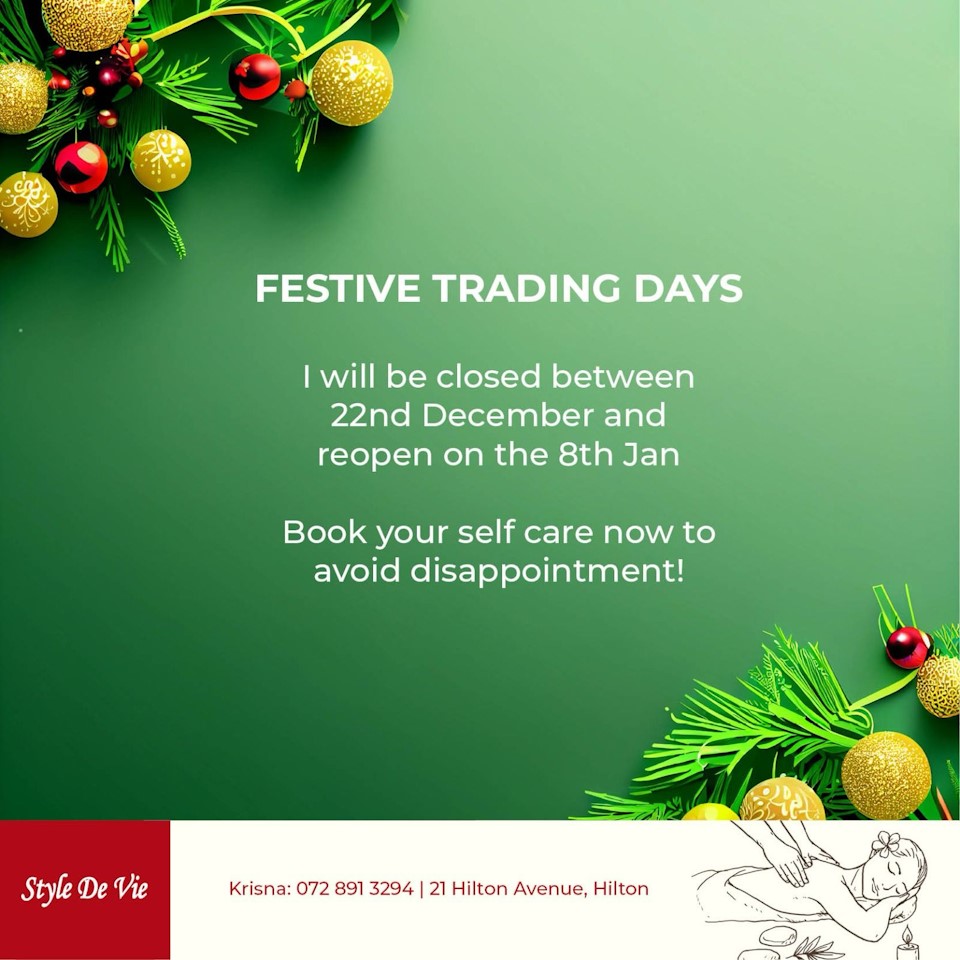
STYLE DE VIE 'It is the end of yet another year and I would like to thank all my established as well as every new client for your loyal support. Without you I cannot do my job and live out my passion to help people heal and recover.
Please remember that gift vouchers are always available and treat yourself or a loved one this festive season. I would also like to wish you all a happy and festive Christmas and holiday. Travel safe and I look forward to being of service upon your return. Please see below my festive season trading hours. Greetings from Krisna | 072 891 3294.'


 New year, new benefits!



 Teaching English as a foreign language (TEFL) gave Cape Town resident Kirsten Colquhoun the opportunity to visit 27 countries by the time she was 29 – all while earning an income. After graduating with a degree in English and Psychology from the University of Cape Town, she packed her bags and set off for Thailand to begin her globe-trotting adventure, which ultimately influenced the trajectory of her life and career.
  WESSA's first Colour Run focused on Health and Wellness which took place on Saturday, 9 December 2023, included two foreign exchange students from University in Switzerland. They are currently seconded to study at Umgeni Valley. Working On Fire also took part in the event.


 In today's rapidly changing business environment, the significance of employee productivity and satisfaction cannot be overstated. They are critical elements that drive the success of any business.

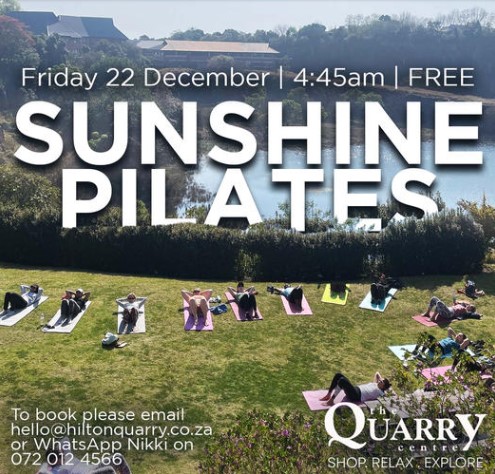 End the year off on a peaceful note with our Sunshine Pilates session this Friday, 22 December at 4:45am. Hosted by Ang from Maud Motion, this FREE pilates session will reinvigorate your soul and calm your senses during the busiest time of the year and get you feeling relaxed and ready for all the festivities to come!