 The UCSI has made its mark on crime in the Howick, Hilton, Merrivale and surrounding areas. The gantry mounted ANPR SNIPR cameras are proving to be successful and under the professional management of the UCSI, the right information is getting to the Law Enforcement Officials and affiliated Security Companies to effect the arrests or assist with investigations. With over 26 successes and assists since March 2019, the UCSI has also been able to guide and assist numerous SAPS investigations from all over the Midlands
To date nine (9) UCSI gantries have been installed with donations from the local business community and entities. Howick has been the area where the support and uptake from the community has been most favourable with all 4 access/egress routes now being covered by ANPR SNIPR CCTV mounted gantries. Along with other community role-players (SAPS and NHW) crime, in general, has been reduced in the Howick area. We now need to focus our efforts on getting the other strategic locations in Howick West, Merrivale, Merrivale Heights, Cedara, Birnamwood, Hilton and Mpophomeni covered.
A huge thank you to the surrounding areas of Curry’s Post and Karkloof for also coming on-board and joining the UCSI network. Mention must be made of the affiliated security companies in our area that have aligned themselves to making a positive change in our communities. Ballid Security, Knight Security Solutions and PMB Security are all contributing to the success of the UCSI and working together to make the Midlands a safe place. Has YOUR security company invested in your community and your safety? The UCSI wants to work with ALL security role-players to make our uMngeni Municipal area a safer place.
June and July were once again successful months for the UCSI, as we continue to grow and make inroads into dealing with crime.
These successes are attributed to dedication and hard work, but it costs money to set-up and keep the UCSI SNIPR camera project going. The UCSI needs to grow its financially contributing membership and the community is encouraged to come on-board. You can go to the UCSI website at www.ucsi.org.za or visit and like our awesome Facebook page. For as little as R50 per month for individuals and R300 per month for business entities, you can become part of the solution.
The UCSI would also like to thank the following entities that have contributed to the establishment of the 9
gantries in our local areas.
They include: Greendale Superspar, Greendale Acres centre, Howick High School, Howick Prep School, Natal Forest Nursery, Amber Valley, Amber Ridge, Amber Lee, Amber Lakes, Amberglen, Yard 41, Harvard House, Mediclinic Howick, Eagle Ridge Estate, Amberfield, Howick VillagePharmacy, Protea Gardens, Karkloof Security, Knight Security Solutions, Colenbrander, Shell Hilton,Smarter Business, Hilton Harcourt’s and Life Hilton Private Hospital.
There are numerous other contributors that have donated and will be mentioned when their gantries have been erected. There are another 9 gantries imminent and these will help grow the UCSI network, making it even more effective. If you would like to make a capital donation towards a gantry in your area and have your business name on the signage please email the UCSI at This email address is being protected from spambots. You need JavaScript enabled to view it.. The areas needing the gaps filled urgently are Merrivale urban, Merrivale rural, Howick West, Hilton and Mpophomeni. Capital contributions of R20 – R30k will go a long way to getting these areas covered. The UCSI is a registered not-for-profit company and is able to award a Section 18 A certificate for any donations made. The UCSI is also BBBEE level 2.
The UCSI Board of Directors wishes to thank the uMngeni Municipality for all the support to date. This public-private partnership is proving to be a success and leading the way in active crime-fighting in communities. The UCSI is a flagship project that can be considered as paving the way in “best practice” for other Municipal areas.
News supplied by UCSI.
 Ayanda wants to WIN this Bosch Jacket. He can't, he is Hilton Village Build It staff, but YOU can. To Enter LIKE the Hilton Village Build It Facebook Page and TAG (@hiltonbuildit) us in a photo of yourself using your Bosch machine OR take a selfie in our store with the Bosch cut-out and TAG Hilton Village Build It on Facebook.
 Laddsworth pupils took part in the SASMT (South African Society of Music Teachers) Eisteddfod which was held between 29 July and 9 August 2019 in Pietermaritzburg.
 "Mark Banks On Ice at ANEW Hotel Hilton" comedy show this Friday 23 August.
 Please report any crime, no matter how small, to your local SAPS and Security Service Provider. If you have items stolen it is important that you open a case and get a CAS number. Reporting crime to the South African Police Services is very important and unfortunately many people feel that it often isn’t worth the effort. Yes, it will take up some of your time, but it is also your duty to those around you to do so, because by not reporting your crime you are allowing a criminal to continue with their activities.
  Come out and bring the whole family to enjoy a Spring Market to raise funds for Seedlings Montessori Pre School.
 Crime Tips
 Laddsworth Primary School invites you to take part in the annual Laddsworth Trust Fund Golf day on Friday, 30 August 2019 at Victoria Country Club.
 Never Never Land Creche in Cedara, were the lucky recipients of 20 bicycles from the Hilton and Howick Rotary club.
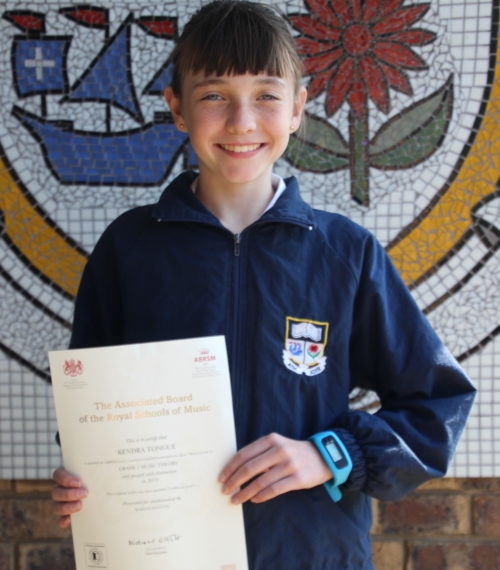 Kendra Tongue, a Grade 6 pupil at Laddsworth Primary School passed the Associated Board of the Royal Schools of Music Grade 1 Theory exam with distinction (94%). She was awarded with a merit certificate on 30 May 2019.
 Parents in the 21st century face challenges that no generation before us has had to face. The pressure is on, and often it is the cause for our parenting journey to feel more frustrating and overwhelming than anything else. Very often, it’s hard to find the joy. The pressure, busyness and stress of life today has robbed us of our ability and time to just PLAY.
 Laddsworth pupils competed in the TSA (Tennis South Africa) KZN Umgungundlovu Tennis Tournament, held at Kershaw Park from 9 to 11 August 2019. There was some very stiff opposition and our pupils did very well.
 Congratulations to Penny Wheeler and her team on another successful trail run/walk through the beautiful Winterskloof Valley. Keep up the good work Winterskloof Conservancy!
 Legendary South African comedian Mark Banks will be performing his new one-man show On Ice for one night only on Friday 23 August at ANEW Hotel Hilton.
 WIN a Bosch Jacket. To Enter LIKE the Hilton Village Build It Facebook Page and TAG us in a photo of yourself using your Bosch machine OR take a selfie in our store with the Bosch cut-out and TAG Hilton Village Build It on Facebook.
 Mark Banks has come out of hibernation to bring you his new One Man stand- up show – Mark Banks On Ice to the ANEW Hotel Hilton on Fri 23 August 2019.
 21:00-22:00