Time: 7pm, entry R25, bring your own booze. Food and soft drinks are available for sale. Musicians who want to play at MiTH, please contact
This email address is being protected from spambots. You need JavaScript enabled to view it., Bill Pocket cell 076 684 7647 or Charles Webster cell 082 331 7271 or Doug Borain cell 072 340 7034.
DIRECTIONS TO MiTH:
ROADWORKS ARE COMPLETE! The approach to MiTH is now safe and well-marked, so don’t let a bit of mist (or MiTHt) keep you away.
Take the N3 to Hilton, take the Hilton turnoff and go South into the Village (away from Hilton College). Travel 5,2km along Hilton Avenue (past two sets of traffic lights and Old Main Brewery) and keep going straight as Hilton Avenue turns into Dennis Shepstone Drive. At the 5,2km mark, Knoll Drive will be on your right – the entrance to MiTH is the *second* entrance on your left into The Knoll Historic Guest Farm.
7pm - OPEN MIC
7.30pm – KIRSTEN HUNNEYBALL
Originally from PE, Kirsten moved to Durban two years ago. Music has been a huge part of her life, starting with piano playing at school and playing the trumpet in various orchestras and jazz bands. She decided to try her hand at singing in 2013 and fell in love with it and was the lead singer for Apparently Jak (played at MITH, Outland festival, Sugar Rush park and more). When the band broke up last year she was given a guitar and decided to try teach herself how to play. Ever since then she’s been trying to do the solo thing and do a mix of cover and original songs. Her influences include Leanne La Havas, Adele, Asa, Tracy Chapman and others. She pays attention to lyrics and, being new at guitar playing, keeps it simple yet soulful.
8.00pm – ALLEY CATS
The Alley Cats are an all - star cast of Rockabilly die-hards. They perform an electric set of rock & roll standards with a special emphasis on Stray Cats covers and Rockabilly tunes with some originals thrown in. The trio formed out of a shared love for swing, bop and blues music and keep the vibe strong with some surf rock classics. Crowd responses have been overwhelming, and it is advised that patrons consume enough fluids to overcome dance fatigue. Come lend your ears and give them a listen. Watch this page for gig dates and performances. Guitar / Vox - Slim Jim (Christo Loots), Bass / Vox - Freakout Freddie (Skippy Khubeka), Drums - Trashcan Bav (Chris Meling).
9.00pm – THE RADIO RATS
Seminal South African rock band, Radio Rats are celebrating their 40th anniversary with the release of a new album, “The Concise Rock and Roll Primer” and a tour that takes in their home-town of Springs, Durban and Johannesburg, and includes an appearance at Music in the Hills (MITH) on Wednesday, 16 August.
Almost forty years ago, in late-1970s South Africa, the Rats had a hit with a song about a spaceman called ZX Dan. That song and hundreds more songwriter Jonathan Handley has penned since then remain an important, if sometimes overlooked, part of South Africa’s musical landscape. The Rats were recently the subject of a feature-length documentary by Durban-based filmmaker Michael Cross. Twenty-five years in the making, “Jiving and Dying - The Radio Rats Story” introduces the music of Radio Rats and the words of Jonathan Handley in an attempt to afford them the place they deserve in the history of independent rock ’n’ roll in South Africa. The film, which premiered at the 2016 Durban International Film Festival before a tour of it’s own to Johannesburg, Cape Town, London and Amsterdam, shows how the Rats were to influence one fellow resident of Springs, James Phillips (aka Bernoldus Niemand) to form a band and to write songs. It was Phillips who went on to initiate the alternative Afrikaans music scene of the mid-80s, the Voëlvry “movement” and, indirectly perhaps, the Oppikoppi music festival where a stage still bears his name.
The N3 Tour is a rare opportunity to see the the noisy little band from Springs, as they launch their thirteenth album, forty years after they first got together.
ABOUT MiTH:
MiTH is a semi-open mic music club. An opportunity for musicians to share the joy of their music with a friendly audience which includes fellow musicians – who have all “been there” too. (Non-musicians welcome too!) Whether you’re a newbie looking for your first opportunity to perform publicly, or a more experienced / mature musician simply looking for people who are as passionate about music as you are – come along and join us!
Visit www.mith.co.za for more details and directions.
 Cool Winds Pre-Primary is celebrating Heritage Day by raffling tickets to win the most amazing hampers. The Hampers represent countries from all over the world. If you are interested to support us in selling tickets or should you want to buy tickets, do not hesitate to contact the school.
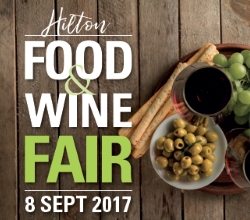 Wine-lovers and food-fanatics from Hilton and surrounds can look forward to testing, sampling and pairing wines, from top wineries from around the world, with local dishes at the annual Hilton Food & Wine Fair which takes place on Friday, 8 September at the Protea Hotel in Hilton.
 Eva Stainforth in Grade 9 at Grace College participated in the SANESA show earlier this term where she placed 2nd in Working Riding Class. Once again Eva showcased her wonderful riding skills by coming first for Working Riding at a subsequent event and has since been selected for the KZN Schools Team. Well done Eva!
 We celebrate our birthday month with you, our loyal customers... without you The Cookhouse wouldn't have got this far...
 Time: 7pm, entry R25, bring your own booze. Food and soft drinks are available for sale. Musicians who want to play at MiTH, please contact
  Laddsworth hosted a Mini Hockey Festival on Tuesday 15 August 2017. 60 Grade 1 and 2 Teams from Primary Schools in the Midlands and Pietermaritzburg area took part in the Festival.
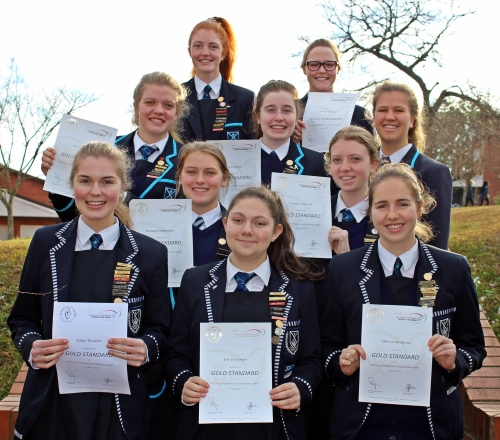 11 St Anne’s girls have achieved Gold Certificates for their participation in The President’s Award for Youth Empowerment over the past 10 months.
 Umgeni Veterinary Clinic experienced a fire at their offices over the weekend and will thus be closed until the extensive damage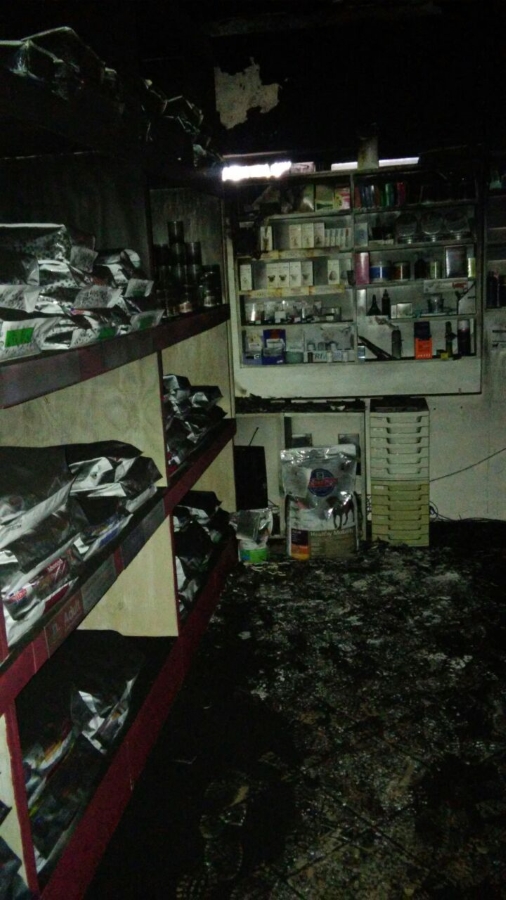
 Hilton Health and Wellness Centre are celebrating their 1 year anniversary this year.
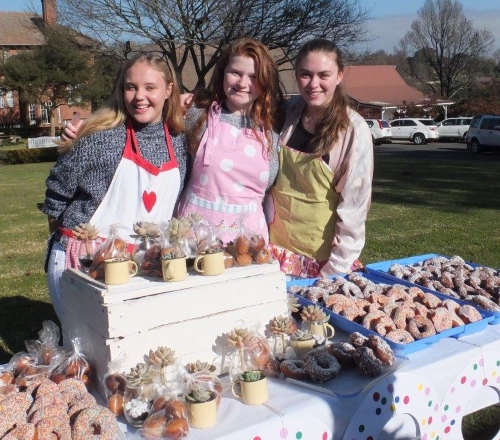 STEPP held a fete to celebrate Youth Day on 16 June 2017.
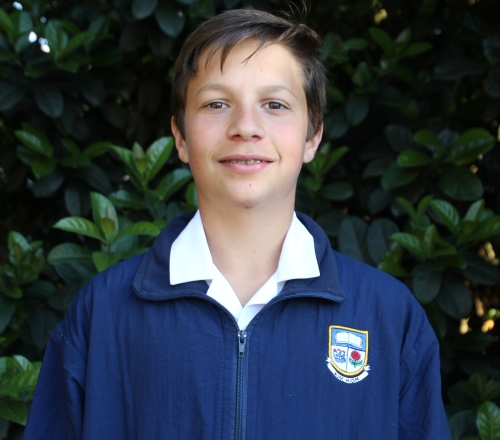 Chris Prinsloo, a Grade 7 pupil at Laddsworth Primary School, who plays for the Pietermaritzburg Collegians Youth Rugby Club, has been selected to represent the KZN Duiker team.
 Sam Moore has once again done superbly in his Mountain Biking. He claimed 3rd place in the Spur Schools League held at Fulton School for the Deaf. He then came 1st in youth men category in the 45km classic Tour de Krans held in Harburg. Finally, he took 1st place for youth men in the Illovo Eston 60km classic. Sam’s hard work this year has earned him a sponsorship from Jowetts Cycles.
 In just over 3 weeks we will be celebrating Women of the World; making a difference one women at a time. We invite all 'friends of St Anne's' to join us for an inspirational lunch with our fascinating speaker, Tracey Webster. Tracey was instrumental in starting the Starfish Foundation in South Africa, among many other achievements, and is a dynamic woman of Africa. She will enthuse and entertain us as she regales us with the story of her success and the passion that drives her. Our very own Jane Linley-Thomas, will be the Master of Ceremonies for the event creating a lively and fun atmosphere! She will entertain us as we enjoy a delicious harvest table and complimentary glass of wine.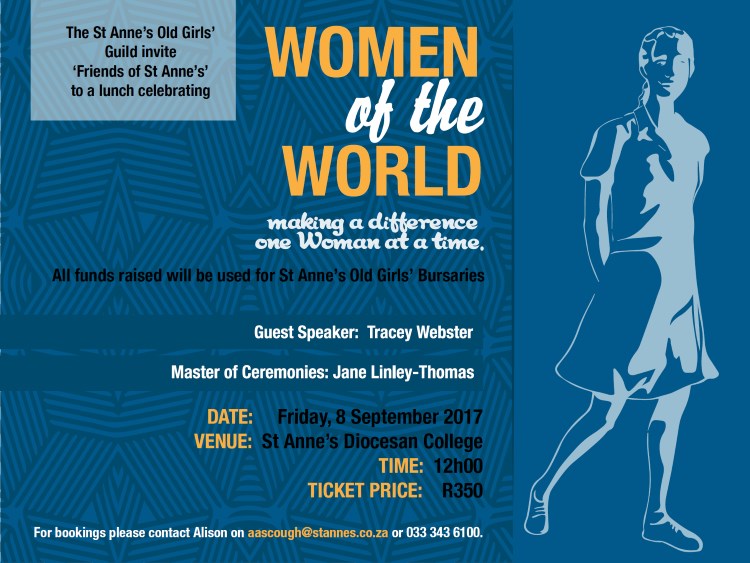
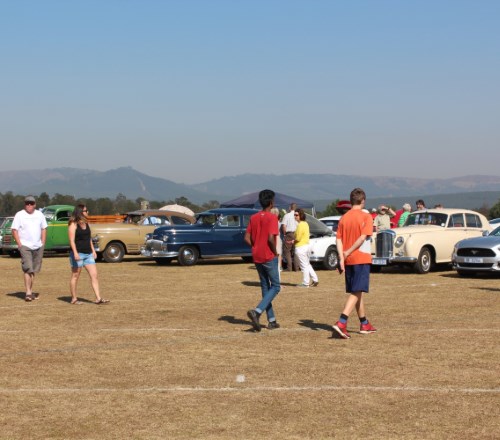 Grace College hosted The Hilton Car Show which attracted a fair number of collectible cars as well as Subaru Pietermaritzburg and Halfway Ford. On the day top class coffee was served, delicious food was sold and a jumping castle for the young children added a festive air to the show. This car show will definitely be an annual event on the
 We are very meticulous when it comes to printing training manuals. We even take the time to go through each one!!!!