 Time: 7pm, entry R25, bring your own booze. Food and soft drinks are available for sale. Musicians who want to play at MiTH, please contact This email address is being protected from spambots. You need JavaScript enabled to view it., Doug Borain cell 072 340 7034 or Charles Webster cell 082 331 7271 (Bill Pocket is away on leave).
DIRECTIONS TO MiTH:
Take the N3 to Hilton, take the Hilton turnoff and go South into the Village (away from Hilton College). Travel 5,2km along Hilton Avenue (past two sets of traffic lights and Old Main Brewery) and keep going straight as Hilton Avenue turns into Dennis Shepstone Drive. At the 5,2km mark, Knoll Drive will be on your right – the entrance to MiTH is the *second* entrance on your left into The Knoll Historic Guest Farm. (Dennis Shepstone Drive is currently under heavy construction – so please be very cautious.)
7pm - OPEN MIC
7.30pm – NICK PHARAZYN
Nick is one of Hilton’s long-standing blues singer-songwriter-guitar-harp plays, and will be joined by Charles Webster for a friendly jam session on the MiTH stage.
8.00pm – St JOHN AND TANYA
These two are some of our favourite musicians here in the Midlands of KZN.
Tanya leaves her heart on the stage - the utter abandon with which she delivers jazz standards, jazz not-so-standards and soulful ballad covers has left MiTH members tearful on more than one occasion. She lives and breathes every lyric. St John, in his unique, quiet way, provides a perfect foil for Tanya with smooth and evocative keyboard work and a raspy vocal that is as surprising as it is visceral. Their talent is undoubted and self-evident. Their impassioned performances, however, are clearly a function of deep pools of emotion. Tanya Nicolson, St John Haw.
9.00pm – MR JONNY LUCK
It’s been a little over a year since Jonny Luck quit his long-time hate-love relationship with the behinds of bars to take on a bitter-sweet love-hate relationship with the music industry. It’s been going greatish. Having learnt a thing or two about what’s what, realization struck that the road was calling and stories needed to be told. So a tour was put together. A good one. So if you’re feeling a little unlucky this autumn. Why not let a little luck shine with some original DARK FOLK BOOZE BLUES? Born and bred Capetonian, Jonny Luck is a singer/songwriter hidden behind an acoustic guitar and a dirty voice. Mixing a blend of whiskey soaked blues and fresh upbeat folk, this story teller will have you reminiscing of misspent youth, new love and those nights spent drinking at your local watering hole. Jonny Luck is a one man show incorporating earthy guitar rhythms, passionate harmonica lines and a worn in soul voice, all backed by the drive of a stomp box. Catch him on the road, up the road, down the road, and generally wherever the road may lead him.
Take a listen!
ABOUT MiTH:
MiTH is a semi-open mic music club. An opportunity for musicians to share the joy of their music with a friendly audience which includes fellow musicians – who have all “been there” too. (Non-musicians welcome too!) Whether you’re a newbie looking for your first opportunity to perform publicly, or a more experienced / mature musician simply looking for people who are as passionate about music as you are – come along and join us!
Visit www.mith.co.za for more details and directions.
New supplied by MiTH.
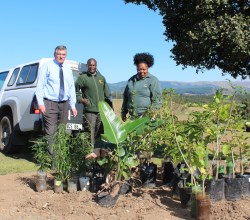 Grace College in Hilton is thankful for the sponsorship of 50 assorted indigenous trees from KZN Wildlife, these will be planted to provide shade for years to come.
 Sujatha joined Hilton Veterinary Hospital in January 2017. She is one of our dedicated, caring veterinarians that form part of our team. Suj, as we fondly call her, has aamazing sense of humour and keeps us entertained.
  Laddsworth Pupils participated in the Karkloof Classic, which was held on Sunday 28 May in Karkloof.
 Laddsworth Primary School would like to congratulate their following pupils who were selected to represent KwaZulu Natal Inland Hockey teams:
 Postnet Hilton has Friendly and Professional Staff!
 Concussion is a serious injury - taking a baseline balance test before injury is helping protect our children who play sport.
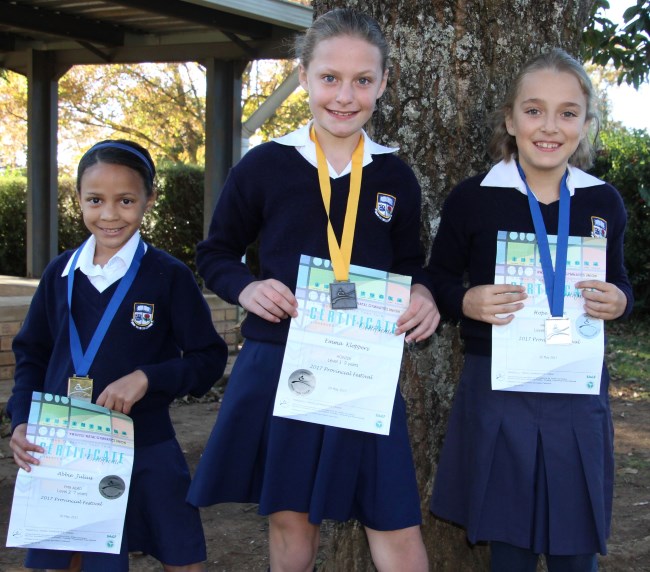 Laddsworth pupils took part in the Gymnastics Provincial Festival, held in Pietermaritzburg on Saturday 20 May 2017. Abbie Julius Level 2: 7 years, Emma Kloppers and Hope Greef: Level 1: 9 years. They have been awarded Kwa-Zulu Natal Union colours and will represent KZN and compete in the Inter-Provincial competitions in Johannesburg. We wish them the best of luck.
 Laddsworth pupils were selected to represent various Umgungundlovu Hockey teams at the Kwa-Zulu Natal Inland Hockey Trials over the weekend of 20 – 21 May 2017.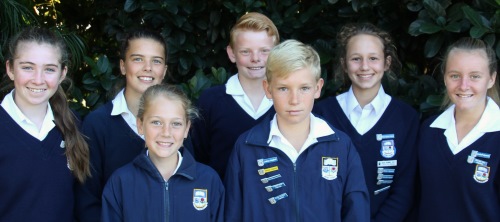
 A to V blind solutions is devoted exclusively to blinds.
 Laddsworth Grade 4 pupils; Kendra Tongue and Imogen Kirby, participated in the South African Gymnastics Federation, Club Trophy Coastal Competition held in Durban on Saturday, 27 May 2017. Kendra took part in the Freedance and Hoop Routines and was placed first in the Under 10 Category, receiving a Gold Medal and the prize for the highest mark in the Under 10 section. Imogen Kirby took part in the Rope-Apparatus ‘Ready or not’ and achieved a second place. Well done Girls!
 Very excited to be selected as one of the preschools to be on National Television! The Kleuterzone production team will be at Cool Winds Pre-Primary on the 27th of June 2017 to film our beautiful school and very special children. What a privilege!
 Grade One pupils from Laddsworth Primary School; Megan Gibbs and Sebastian Bezuidenhout took part in the Royal Show on Friday 26 May.
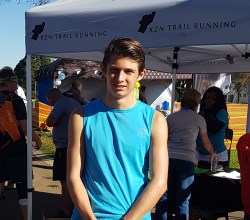 On Saturday, 13 May, Nick de Scally ran the Piggly Wiggly parkrun. He managed to take 40 seconds off his last best time thereby breaking the two week old course record, which stood for 2 and a half years until it was recently broken, 2 weeks prior to Nick’s record run by a Michaelhouse pupil.
 Food and Wine Pairing Thursday 8th June.
 Time: 7pm, entry R25, bring your own booze. Food and soft drinks are available for sale. Musicians who want to play at MiTH, please contact
  Grade 5 pupils at Laddsworth Primary School have been busy knitting blankets during the second term.