In a historic translocation in 2016, Somkhanda Community Game Reserve welcomed a herd of 13 elephants donated by Nambiti Game Reserve. This was hailed as an epic collaboration, as, for the first time, two community-owned reserves had successfully worked together to extend elephant range and distribution. This illustrated the importance of community conservation, not only in fostering upliftment and local economic development but in the conservation of iconic and endangered African wildlife.
Recently, in a joint operation between WILDLANDS – a programme of the WILDTRUST, the Aspinall Foundation (in partnership with Albus Environmental), Ezemvelo KZN Wildlife and Conservation Solutions, a 20-year-old Tusker was successfully translocated from Tembe Elephant Park, owned by the Tembe Traditional Authority to Somkhanda Game Reserve, owned and managed by the Emvokweni Community Trust.
Tembe Elephant Park was established in 1983 to protect the last remaining herds of free-roaming elephants in South Africa, known as the 'Great Tuskers.’ These giants used to seasonally roam between Mozambique and Maputaland in the extreme north of KwaZulu-Natal before finding sanctuary in Tembe during the Mozambican border war and preferred to settle in the dense sand forests of the reserve. The dream of re-uniting the elephant population across the international border remains, but till that is achieved, management has to implement creative solutions for dealing with a growing elephant population in a relatively small reserve. Current solutions being the contraception of female elephants and the translocation of surplus elephant bulls.
Similarly, Somkhanda Community Game Reserve, the new home of the great tusker, who is yet to be named, is owned by the Emvokweni Community Trust (ECT) which was established in 2005 through formal land claims and declared a protected area in 2011.
The introduction of this new bull will not only strengthen the reserve offering since eco-tourism has been earmarked as an important vehicle for economic growth in the country but it is set to strengthen the gene pool of the current herd at Somkhanda. According to Roelie Kloppers, CEO of the WILDTRUST, “The Great Tuskers of Tembe are known all over the world as majestic giants. Bringing a Tembe elephant into Somkhanda’s herd will enable the continuation of the Tembe Tusker lineage in this reserve. This will not only be a massive boost for tourism here, but also contribute to conservation efforts of Ezemvelo KZN Wildlife in Tembe Elephant Park. We are very proud to play a little role in support of this.”
As noted above, the introduction of this bull is seen as a strategy to contribute towards the conservation of these giants. Elephant populations across Africa and Asia are under threat due to the illegal ivory trade driven by devastating effects of poaching, human-elephant conflict and habitat destruction. It is up to collaborative efforts of these organisations that stand united behind these conservation strategies that will end this crisis.
The translocation was facilitated and funded by the Aspinall Foundation who is an internationally renowned animal conservation charity that is dedicated to protecting endangered animals around the globe. Dereck Milburn, Regional Director at Aspinall Foundation comments, ‘’I am absolutely thrilled to see this giant in his new home. I would like to thank the Emvokweni Community Trust and WILDLANDS for their willingness to accept the responsibility of securing the life of this bull and the tusker genetics for the benefit our future generations’’. The Aspinall Foundation partnered with UK Company, Albus Environmental in delivering this project.
Translocating big game requires a lot of patience, skill and technical support which was provided by Conservation Solutions. With 25 years’ worth of experience, Conservation Solutions have developed unique translocation systems to be able to move elephants across Africa. “Community-driven conservation plays an essential role in the protection and restoration of flagship species such as the elephant. A project like this highlights the potential for communities to collaborate in the restoration of wildlife biodiversity. These species are ambassadors for the ecological systems in which they live - protecting them justifies the protection of their natural habitat, and all the thousands of other species which occupy the same space,” comments Founder Kester Vickery of Conservation Solutions.
Today, Tembe is home to some of the biggest elephants in Africa and their elephant population is one of only three indigenous elephant populations that remain in South Africa. The Somkhanda team on the ground have reported that this bull is settling in well in its new environment. We remain hopeful that he will soon be welcomed into the Somkhanda herd to infuse its population with the genes of the ‘Tembe Giants’ for generations to come.
Pictured above: The WILDLANDS team at the translocation
 Dandelion Dreamz is a mom and daughter baby boutique business founded in 2020 during the COVID pandemic with one goal in mind: providing a high-quality, user-friendly and reliable online store. The business started after Robyn had Daniel. Maryanne saw an opportunity and a gap in the market for affordable, well-made baby mobiles. Maryanne has always been extremely creative and loves to create new things.



 In South Africa, 1 in every 500 babies is born with Down Syndrome.


 Do you find your family are rifling through the snack cupboard just before supper?
 Dasha Creations is a small family business in Hilton South Africa, we work from home and supply a number of industries with wooden items for promotional purposes e.g. Game Lodges and Corporate Companies.




 'Vegetables harvested from the iThemba Preschool garden in the morning and an hour later, served for lunch! Vegetables lose their nutrients the longer they sit on the shelf (they can lose up to 45% !) and so the fresher the veg, the better the health benefits. Growing minds need good nutrition! That's why we're grateful to be able to work with volunteers at the ECD sites we mentor, helping them start permaculture gardens like this one, giving kids the nutritional foundation they need for their brains and bodies.' from
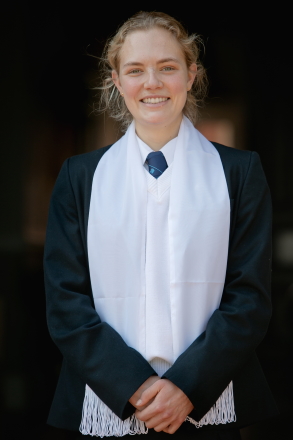
  Pictured top: Mrs Kari Greene (Chair of the Board), Mr David Arguile (College Head), Mr Trevor van Niekerk (Deputy Head: Academics), Tsholofelo Mkhari (Head Girl) and Sarah Church (Dux) at the recent St Anne’s Diocesan College Prize Giving Ceremony.