We are almost 100% guaranteed to experience the death of someone close to us in our lifetime- whether it is a pet, or whether it is the death of a very much loved member of the family, or a friend. Isn’t it ironic that as a society we don’t talk about this very commonly experienced event? We would rather cross to the other side of the street so as to avoid having to speak to someone who has recently been bereaved. Are we expected to be “over it” in a week? Many of us are not equipped with knowledge to negotiate the stormy waters of the grieving process. And so in this very challenging process the bereaved are left to try and find their way through the darkness on their own, without really knowing where they are headed, because of the veil of silence surrounding this topic.
This taboo topic of Grief is explored in a workshop to be held on Saturday October 17th, 2015 in Hilton. Life Coach Cherri Forsyth lifts the lid of silence on this emotive process. The workshop addresses mainly bereavement, but includes the loss of a job, of your health, of your home, a beloved pet, a relationship. She imparts knowledge on the grieving process, which will enable the journey of loss to be more easily negotiated.
An important fact is discussed- that the 5 stages of grief (Elizabeth Kubler-Ross) are shown to be inappropriately applied after the loss of a loved one. Dr Kubler-Ross identified these stages for people with terminal illnesses- not for those left behind! Many professionals over the years have been trained to care for bereaved people by referring to these 5 stages- however, new research has shown that there are many phases in grief recovery (including the 5 stages of Kubler- Ross), but also many more- things like confusion, volatility, withdrawal, aggression and many others. The new approach has allowed a more natural and normal approach to grieving.
Also of utmost importance is the fact that there is no “right or wrong way” to grieve – your heart and intuition know what you need- whether you need solitude, or a “cuppa” with a friend!
When someone we love dies, we are left with an open, raw gaping wound that can’t be seen. We feel like a part of our body has been ripped off, and there is this empty silent space.... space left by our loved one. There is a space at the dining room table, a space in the bedroom, a silence where there was chatting and excitement. All we can think of is, “I miss you so much, I miss you, I miss you”. How can we not have our foundation shattered by something this powerful? How can society praise us when we are ‘so brave, so strong- with comments like, “He didn’t even break down- how wonderful he was”. No!, we need this process of grieving to be as authentic and truthful as possible. And if someone close to us has died, of course we will be sad- why is the stoic, stiff upper lip attitude praised? Why is there such a pressure to be strong? Embracing our true emotions of sadness is essential for healing. However, Society imposes extra pressure on us by expecting us to be “normal, never cry, don’t be sad, and be over it within a week!” This causes us to repress all of these very valid emotions...in order to “fit in” with what is acceptable in our society. This can retard and derail our healing. Talk about missing the boat!!
So what is Dysfunctional or complicated grief? If your actions are detrimental to yourself or others, then you may be experiencing Dysfunctional Grief. In this case, it is strongly suggested that you receive professional help. Let us get help before our grief has devastated families and relationships.
The following questions (amongst others) are also discussed in the workshop:
• What impact has the death had on you personally, and within your family and friends- and how have these relationships been affected?
• Do men and women grieve differently?
• How do we care for a family member/ friend suffering from a loss?
• What is considered “normal” in the grieving process
Let us shatter the silence surrounding this topic so that people suffering loss of whatever kind, can be treated with love and compassion, understanding and care, instead of silence, mis-understanding and judgement. This is a time when the bereaved are vulnerable and suffering, and to be dealt with in an empathetic way helps so much. Let us harness the effects of the hardship, and let us enable ourselves to be “weathered” by our grief, into an even better person than we were before- more compassionate, empathetic, caring. Let us all be kinder to one another. Let us build a ripple wave of knowledge and compassion amongst us all- which will hopefully grow and build, until it is a tidal wave of love and gentleness!
The workshop will be held at the Hilton Methodist Church in Hilton on Saturday October 17th from 8-12.30. If you would like to attend please contact Cherri on 082 801 8961, or email: This email address is being protected from spambots. You need JavaScript enabled to view it..
 Andrew Beyrooti and Carrick McKean represented the KZN Midlands U13 Cricket Team and the KZN Midlands U12 Cricket Team, respectively, at the KZN Inland Festival on the 25th, 26th and 27th of September at St. Charles College.
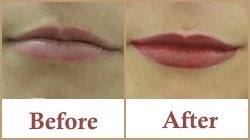 Amanda Hardy came to Bella Donna Hair and Beauty on 7th October 2015 to give Hilton ladies the privilege of waking up beautiful with permanent make-up. The results, as pictured, speak for themselves. This is a great way of always looking your best without spending hours in front of the mirror applying make-up that smears and fades throughout the day. The procedure does involve numbing so there is no need to worry about pain.
 National Pet Obesity Week runs from 15 – 19 October 2015. With this in mind, we would like to highlight a few aspects on pet obesity.
 Cowan House Co-educational Preparatory School educates boys and girls from Grade RRR to Grade 7. Boarding is offered from Grade 3. Our 67 year old school has a strong Christian ethos and is located in the village of Hilton in the KZN Midlands. We have a vacancy for an energetic and enthusiastic: BOYS BOARDING HOUSEMOTHER / NURSING SISTER.
 The IF Trips on Friday was won by Derick Hull, John Aubrey and Etzel Nuss. The second team was George Oldham, Dave Hammond and Andy Hitchcock. Thanks to Investment Facilitators for their continued support.
 Born at 2.15am on Tuesday 6 October 2015, weighing 3,33kg, Tristan Venning is the first baby to be born at Life Hilton Private Hospital. His arrival marks a run of firsts, he is the first born child for proud parents Joanne and Richard who are from Winterton. He is also local lady Lisa Pattinson’s first grandchild.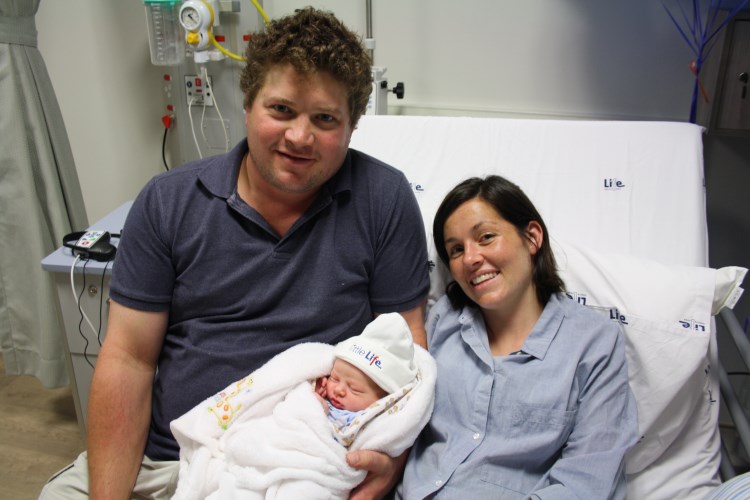
 News in from Living it Green, in support of the kerbside recycling collection Living it Green are offering one free clear recycling bag for every R50 spent for the next two weeks. Go on a green shopping quest tomorrow. The shop at Build It Centre in Quarry Road is open Tuesdays to Saturdays.
 HiltonVillage.co.za launched their
  What’s it called?
 It is time for the Educational Toy and Book Expo 2015 at
  I am absolutely thrilled to tell you that our second load shedding mitigation trial was a success. We did it!
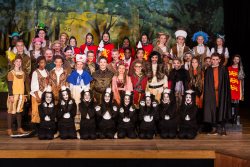 A variety of cultural activities are included in the curriculum at Cowan House Co-educational Prep. School, and all Grade Six and Seven boys and girls recently participated in the annual school play “Robin and the Hilton Hoodies” in the school theatre. The play was directed by drama teacher Julie Meiklejohn with musical direction by Naomi de Klerk, and was enjoyed by sell-out audiences on all three nights.
 Have you ever tried growing Jerusalem Artichokes? We have some ready for sale. These plants grow to at least 2m and produce beautiful yellow flowers. The tubes, which is the part that is edible, is a tasty and crispy addition to a salad and can also be roasted or made into a delicious and unusual soup.
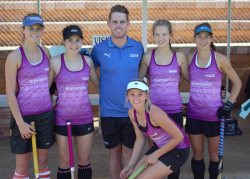 The two-day courses provided players with lessons on professionalism, mental toughness, nutrition, functional ability, vision training, recovery techniques and athlete education.
 A tranquil, cool and park- like garden with many trees and shrubs. Dogwoods, Flowering Cherries, Japanese Maples, Liquid Ambers to name a few of the trees. This garden has been developed over the last 16 years – a labour of love. The highlight of the garden is tea and plants for sale. There will be a “help yourself” tea garden with an honesty box.
 We are sharing this information received by members of an estate in Hilton as it might be of interest to you too!